Osteopathy in Kyoto. In English.
A UK-trained osteopath practising in central Kyoto since 2007. Treatment in fluent English. The same practitioner sees you from start to finish.
- BSc(Ost), Swansea University, UK
- Practising in Kyoto since February 2007
- 120+ international patients a year from over 20 countries
- The same practitioner sees you from start to finish
- Trained to UK registered-osteopath standards
Not sure if OQ is right for you? You can message us before booking. We usually reply within 24 hours. Questions in plain English are welcome.
Who are you visiting as?
Living in Kyoto
Your long-term osteopath in Kyoto. For families, expats, and long-stay residents.
Visiting Kyoto
Short-term relief during your stay. For travellers with 1-2 sessions in mind.
Coming to Japan
Planning a focused treatment trip. For visitors considering osteopathy in Kyoto.
Useful pages
- Planning a visit to Kyoto for treatment →
- About OQ — our team, hours, fees, location →
- What to expect at your first visit →
- Women’s health — pregnancy, fertility, menopause →
- Cesarean section recovery & scar care →
- Paediatrics — newborns, babies, children →
- Stroke rehabilitation →
Visiting Kyoto? We can help.
Long flights, jet lag, and days of walking take a toll. These are the most common reasons travellers visit us:
Neck and back stiffness after a long flight — hours in an airline seat compress the spine and tighten muscles in ways that don’t always resolve on their own.
Sore feet, knees, or hips from walking all day — Kyoto involves a lot of walking, often on temple stairs and stone paths. Pain that builds over several days usually has a structural cause.
Sudden back pain or stiff neck — sleeping on an unfamiliar pillow, carrying luggage, or simply moving differently than usual can trigger acute episodes.
Headache, fatigue, or general heaviness — jet lag, dehydration, and travel stress can leave you feeling off. Sometimes the body just needs a reset.
One session is often enough to get you moving comfortably again. If your situation needs more, we’ll tell you.
Quick info for visitors
Language: Yusuke (director) speaks fluent English. All consultations, explanations, and aftercare instructions in English — no Japanese needed.
Fees (Sakata, 1F):
| First visit (approx. 60 min) | Follow-up (approx. 40 min) | |
|---|---|---|
| Sakata (1F) | 14,300 yen | 11,000 yen |
Cash, Visa, Amex, and most major cards accepted.
Not covered by Japanese health insurance. We can provide a receipt for your travel insurance — just ask.
Location: 2 minutes from Hankyu Omiya Station (Hankyu Kyoto Line). About 10 minutes by taxi from Kyoto Station.
For taxi drivers: 〒604-8366 京都市中京区七軒町466
Hours: 9:00–22:30 (last booking 21:30). Sat: Yusuke Sakata regular hours / Sota Omura by special booking (¥15,000). Sun & Public Holidays: Yusuke Sakata by special booking only (¥18,000). Fully appointment-based.
About Kyoto Osteopathy Center OQ
OQ is a specialist osteopathic clinic in central Kyoto, serving both international visitors and long-term residents. Our practitioners hold internationally recognised qualifications and have treated patients from more than 20 countries.
We don’t do quick fixes or relaxation massage. We look at your whole body, figure out why the problem is happening, and treat accordingly. That’s what osteopathy is — and it’s what makes us different from the massage and seitai clinics you’ll find everywhere in Kyoto.
What is osteopathy?
Osteopathy is a hands-on approach to healthcare that looks at the whole body — not just the area that hurts. Rather than treating symptoms in isolation, an osteopath works to understand why they appeared, using palpation and movement to assess how the body functions as a connected system.
It is widely practised across the UK, Europe, Australia, and the US, where osteopaths hold university-level qualifications and are regulated healthcare professionals. At OQ, we bring that same standard of care to Kyoto.
Our practitioners
Yusuke Sakata, BSc(Ost) — Director (1st floor)
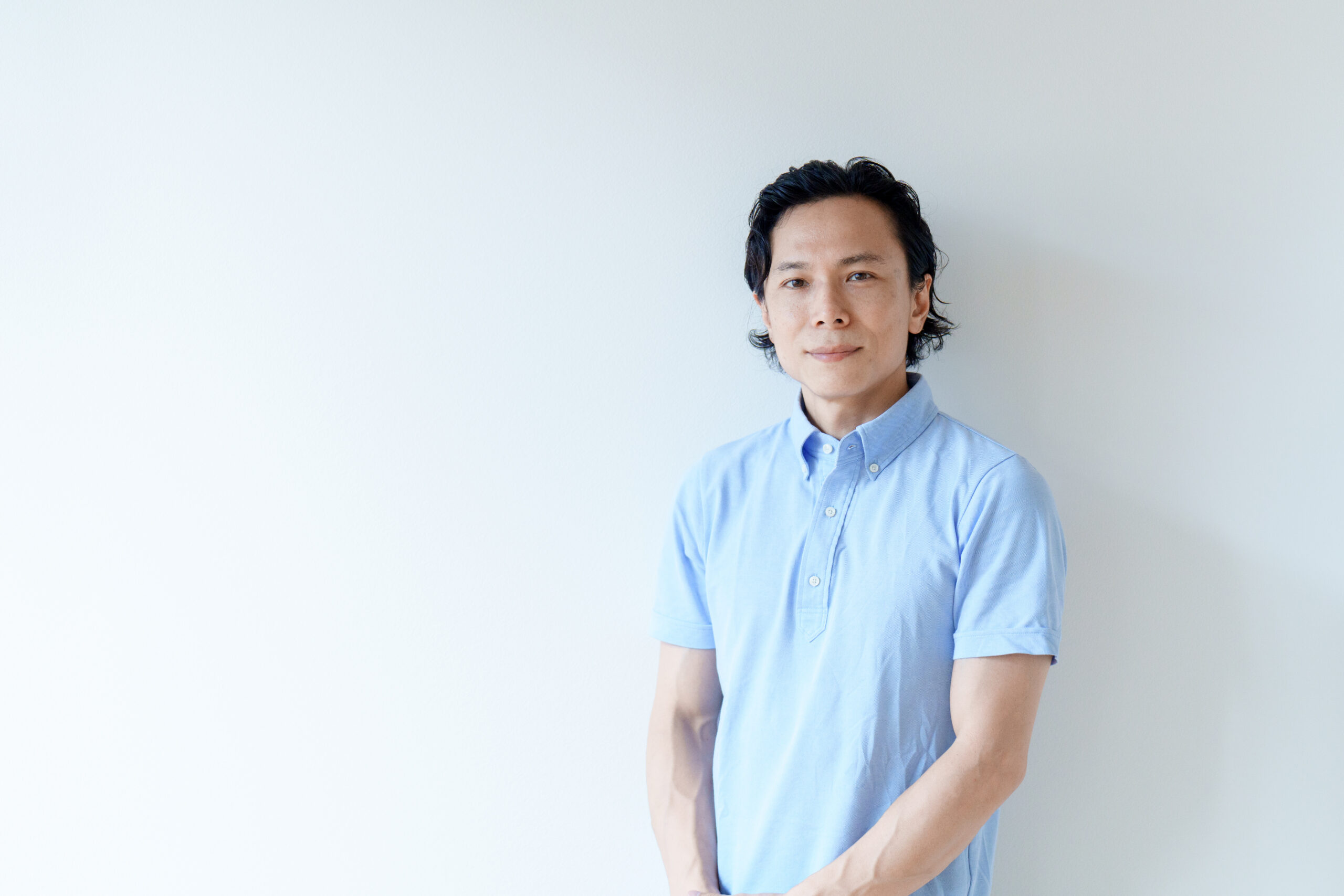
Yusuke holds a Bachelor of Science in Osteopathy from Swansea University, Wales. He has completed EVOST (Evolutionary Medicine in the Osteopathic Field) at morphologicum in Belgium — a five-year post-graduate programme drawing on evolutionary medicine and the original writings of osteopathy’s founder, A.T. Still. The programme concluded its 20-year history in 2026.
In November 2025, Yusuke organised and hosted the first Membrain Health seminar in Japan, inviting its creator Joanna Wildy DO — cranial osteopath and author of Mind & Membrain — to teach in person. He is a listed Membrain Health practitioner at mindandmembrain.com.
With over 25 years of clinical practice — and running OQ in Kyoto since 2007 — Yusuke has applied Classical Osteopathy’s Total Body Adjustment throughout his career. He has also completed a cranial osteopathy course in the United States.
Areas of focus: paediatric care (babies and infants), pregnancy, postpartum recovery, skin conditions, digestive and constitutional health, cranial osteopathy, and whole-body structural problems.
Sota Omura, PT, MSc — Co-Director (2nd floor)
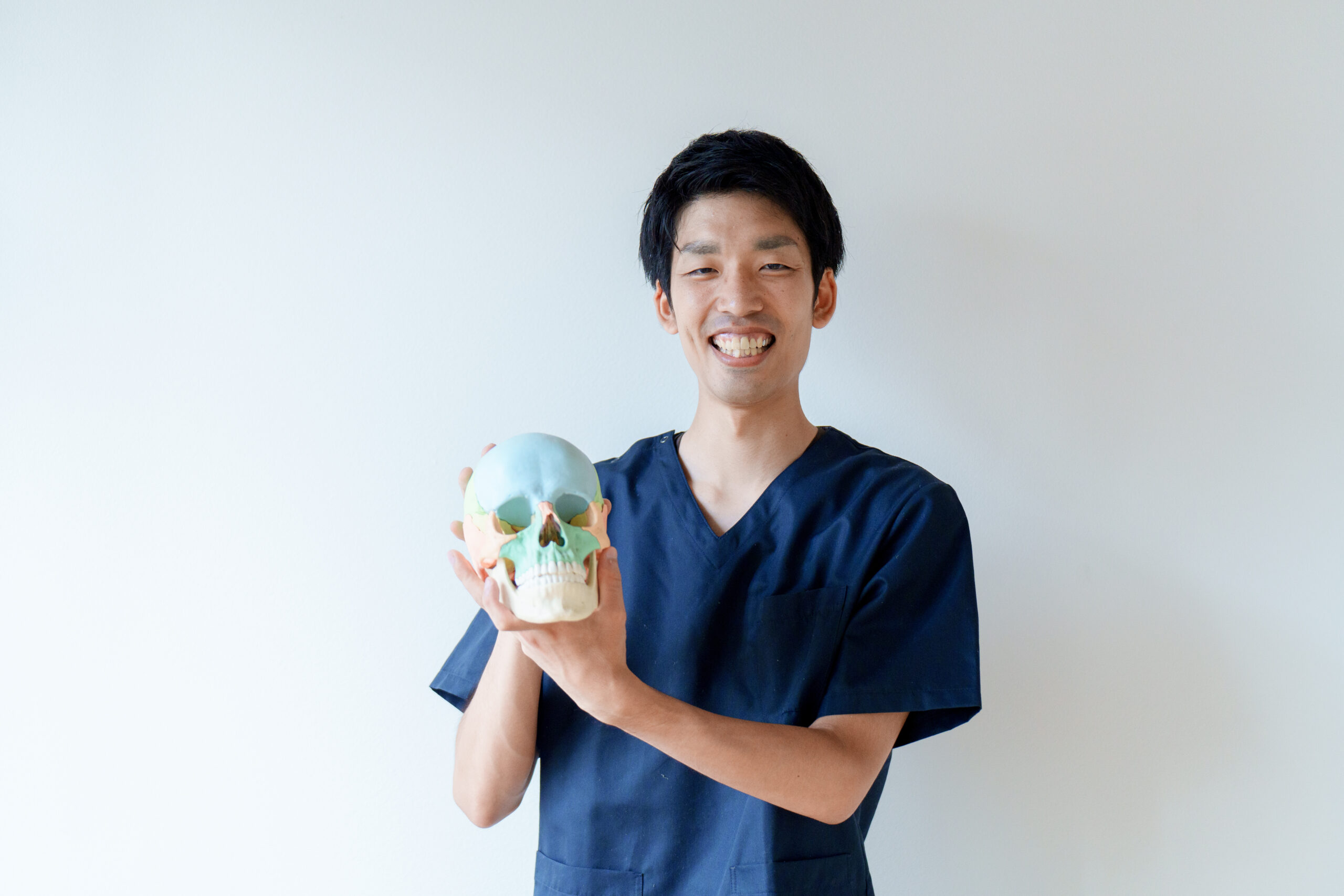
Sota is a licensed Physical Therapist with a Master’s degree in Health Science, with additional osteopathic training from multiple institutions. He specialises in post-stroke rehabilitation, hip and knee conditions, lower limb pain, and gait analysis.
Sota has basic English and will do his best to communicate — we also use written notes, diagrams, and translation tools when helpful.
Areas of focus: stroke rehabilitation, lower limb pain (hip, knee, ankle), lower back pain, gait and walking guidance.
Omura’s fees:
| First visit (approx. 60 min) | Follow-up (approx. 60 min) | |
|---|---|---|
| Omura (2F) | 11,000 yen | 11,000 yen |
Conditions we treat
We see patients of all ages — from newborns to elderly adults.
- Back pain, neck pain, and sciatica
- Headache and migraine
- Frozen shoulder and shoulder pain
- Pregnancy discomfort and postpartum recovery
- Baby care — colic, plagiocephaly, sleep difficulties, torticollis
- Hip and knee pain, osteoarthritis
- Stroke rehabilitation and neurological conditions
- Skin conditions (eczema, psoriasis, atopic dermatitis)
- Digestive and visceral problems
- Developmental support for children
What to Expect at OQ
If osteopathy is new to you, please read this before your visit.
Osteopathy is common in some countries (UK, France, Australia, New Zealand) but less known in others. If you have never had an osteopathic session before, knowing what to expect will make your first visit easier.
What osteopathy is at OQ
- A trained practitioner looks at your whole body, not only the area that hurts
- The director holds a BSc(Ost) from Swansea University, UK — the standard training degree for UK-registered osteopaths
- Treatment uses the hands: gentle pressure, slow movements, careful positioning
- We look at how different parts of your body affect each other — posture, breathing, past injuries, sleep, stress, diet
- We explain what we find and what we do, in plain English
What osteopathy is not at OQ
- We are not medical doctors. We do not diagnose diseases. We do not prescribe or adjust medicine.
- We do not replace your regular doctor. If you have a serious condition, please continue to see your doctor. We work alongside medical care, not instead of it.
- We are not a deep tissue massage. Some sessions involve very little pressure. Some involve no pressure at all — only gentle holding and listening to the body.
- We are not a one-session cure. Most problems need several sessions. Some problems cannot be solved by osteopathy and need a different specialist. We will tell you honestly.
- We are not chiropractors. We do not use forceful cracking techniques as a main method. Some patients confuse osteopathy with chiropractic — they are related but different.
What a first session looks like
A first visit is 60 minutes. It has five parts:
- Listening — We ask about your symptoms, when they started, what makes them better or worse, and your general health and lifestyle. This usually takes 10-20 minutes.
- Examining — We watch how you stand, walk, and move. We gently feel areas of tension or restriction.
- Treating — Hands-on work for about 30-40 minutes. Mostly gentle. You can ask questions at any time.
- Explaining — We describe what we found and why we worked on certain areas.
- Recommending — We suggest self-care at home and, if useful, how many follow-up sessions may help.
When we will tell you “this is not for us”
Sometimes a problem needs a medical doctor, a surgeon, a dentist, a psychiatrist, or a different kind of specialist. If that is the case, we will say so clearly at your first visit, and suggest where you can go in Kyoto or Japan.
We will not take payment for treatment that we do not believe will help you.
How fast will I feel better?
This depends on the problem. Some patients feel lighter after one session. Many feel a clearer change after two or three sessions. Long-standing problems (pain for years, complex conditions) usually need more time — sometimes weeks, sometimes months.
If you need an immediate, dramatic result in one visit, osteopathy may not be the right choice for you. If you are willing to work with your body over several sessions, the results are often deeper and longer-lasting than quick fixes.
Read more in our FAQ for international patients →
Frequently asked questions
Do you speak English?
Yes. Yusuke conducts sessions fully in English. Sota has basic English and uses written notes, diagrams, and translation tools when helpful.
Is one session enough?
Often, for recent travel-related stiffness. For longer-standing problems, usually not — we’ll tell you honestly at your first visit.
Is this the same as Japanese massage or seitai?
No. Osteopathy is a distinct healthcare discipline originating in the United States in the 1870s and now regulated in the UK, EU, Australia, and USA. It goes beyond soft tissue work to address the whole body — joints, fascia, visceral organs, and the nervous system.
Can I bring my baby?
Absolutely. Infant care is one of our core specialities. Babies are welcome.
Do I need a referral?
No. Book directly online.
Is osteopathy covered by Japanese health insurance?
No. Osteopathy is a private (self-pay) service in Japan.
Can I get a receipt for travel insurance?
Yes. A simple one-page receipt is free. It shows your name, the date and time, the length of the session, and that it was an osteopathic session. Just ask at your appointment.
If your insurer asks us to fill in their own claim form, there is a fee of ¥8,800 (tax included). Please note that OQ is not a medical clinic and we do not diagnose, so we cannot complete sections that ask for a medical diagnosis or diagnostic codes.
Whether your insurance covers osteopathy, or the form fee, depends on your policy. Please check with your insurer before your visit.
Learn more
We’ve put together dedicated pages for the most common reasons English-speaking patients come to OQ.
Osteopathy during pregnancy →
Back pain, pelvic girdle pain, rib tightness, and preparation for birth.
Infant and baby osteopathy →
Colic, feeding difficulties, head shape asymmetry, torticollis, and post-birth check-ups.
Visiting Kyoto? Information for travellers →
FAQ for patients passing through — booking, payment, receipts, what to bring.
About Yusuke Sakata BSc(Ost) — credentials & training history →
Qualifications, training background, and clinical approach.
Why your body hurts — an evolutionary perspective →
Why modern humans get back pain, tension, and chronic fatigue at rates our ancestors didn’t.
Do osteopaths crack joints? →
An honest answer about joint techniques — when I use them, when I don’t, and who they’re not right for.
Physio or osteopath in Kyoto? →
What “physio” and “osteopath” actually mean in Japan, how the licensing differs, and who to book.
Just one session? →
About seven in ten of our international patients come once. Here is how we use the hour when that is all there is.
How much pressure? →
Osteopathy is not massage, so the strength of the contact is not something you order. What a session actually feels like.
Walking all day in Kyoto? →
Why a longer stride tires your legs faster — and three things to try on your next long walking day.
English pages
- First Visit
- What is Osteopathy?
- Women’s Health
- Pregnancy
- Postnatal Care
- Babies & Children
- Stroke Rehabilitation
- Fertility Support
- Menopause
- Sciatica
- Hip & Knee Pain
- IBS & Digestive
- Sports Injury
- Scoliosis
- Back Pain
- Concussion
- Autoimmune Conditions
- Skin Conditions
- English-Speaking Osteopath in Kyoto
- Director’s Credentials — qualifications & training history
- Do Osteopaths Crack Joints?
- Physio or Osteopath in Kyoto?
- Just One Session? What Osteopathy Can and Can’t Do on a Short Trip
- How Much Pressure? What an Osteopathy Session Actually Feels Like
- Walking Is Swaying, Not Pushing
OQ Kyoto · Established February 2007 · Book online · WhatsApp