Concussion & Mild Traumatic Brain Injury (mTBI) — An Osteopathic Approach
Concussion — also referred to as mild traumatic brain injury (mTBI) — is one of the most underdiagnosed and mismanaged conditions in clinical practice. The standard advice is rest, then gradual return to activity. But for a significant number of people, symptoms persist well beyond the expected recovery window. Headaches, brain fog, mood disturbances, fatigue, sensitivity to light and sound — symptoms that don’t fit neatly into any single diagnosis.
At OQ, Yusuke Sakata BSc(Ost) takes a different approach — one informed by the clinical framework developed by Joanna Wildy DO, author of Mind & Membrain: Head Trauma and Mental Health. Yusuke was the first osteopath to introduce the Membrain Health concept to Japan, hosting Joanna Wildy in Tokyo in November 2025. He is one of three Japanese practitioners listed on the official Membrain Health practitioner directory.
Why concussion is more complex than it looks
The conventional view of head trauma — that the force passes through the skull directly to the brain — misses something fundamental. The skull is not a rigid container. It is a living structure composed of 22 bones in dynamic positional relationship with one another. Beneath them sits the dural membrane system: a tensegrity structure that absorbs and distributes the mechanical forces placed on the cranium.
In most cases, the dural system has sufficient resilience and capacity for self-correction. In others — particularly with repetitive mild impacts, a history of earlier unresolved head trauma, or injury at a vulnerable period of development — it doesn’t spring back. The geometry of the cranial cavity changes. Perfusion of the brain is affected. And the brain, responding to its altered physical environment, changes its behaviour. That behavioural change is what we recognise as symptoms.
This is the core of the Membrain Health framework developed by Joanna Wildy DO: that the physical housing of the brain — the skull, the meningeal membranes, and the fluid systems — matters in ways that orthodox medicine has not yet fully integrated.
What is Membrain Health?
Membrain Health (MH) is a clinical concept developed by Joanna Wildy DO and described in her book Mind & Membrain: Head Trauma and Mental Health — A New Approach to Diagnosis and Treatment. It proposes that the dural membrane system — the tough connective tissue lining the inside of the skull — functions as a tensegrity structure: one that normally absorbs and redistributes physical stress, and rebounds to its normal configuration.
When this system is overwhelmed — by impact, accumulated micro-trauma, birth strain, dental history, or other forces that have not been resolved over time — the result is what Wildy terms a Membrain Disorder (MD): a state in which the physical environment of the brain is compromised, placing the brain under chronic mechanical stress.
The brain’s response to that stress is behavioural. Symptoms may present as mood disturbance, cognitive difficulty, fatigue, headache, sleep disruption, or emotional dysregulation — presentations that are often attributed to psychological causes, when there may be an unaddressed physical component.
The history of head trauma matters
One of the most clinically significant insights from the Membrain Health framework is that head trauma is layered across a lifetime. It doesn’t exist in isolation. The concussion in your thirties sits on top of a head injury in your teens, an orthodontic correction in childhood, a difficult birth. Each event leaves a structural legacy that may partially resolve — but may not.
When we take a history at OQ, we’re interested in the full chronological sequence: birth history, dental history, any history of head impacts (however minor they seemed at the time), and the timeline of any mental health symptoms. This isn’t routine clinical history-taking. It’s tracing how the form of the skull and meningeal system has been shaped over time — and what that means for function now.
Types of head trauma we consider
The Membrain Health framework distinguishes between several categories of head trauma, each of which can leave unresolved cranial strain:
- Birth-related strain — compression and moulding forces during delivery, particularly with instrumental birth (forceps, ventouse)
- Mild and repetitive impacts — contact sports, falls, minor collisions that individually seem inconsequential but accumulate
- Sudden significant impact — car accidents, falls from height, assault
- Dental and orthodontic history — procedures that alter the occlusion and facial structure can affect the relationships between the cranial base, vault, and face
- Surgical and iatrogenic causes — procedures involving the skull, jaw, or sinuses
- Sustained low-grade forces — postural loading, occupational strain, habitual positions over years
These don’t function independently. They layer chronologically, and it’s the cumulative picture that shapes the present state of the system.
Symptoms that may have a cranial component
People who come to OQ with a history of head trauma — including concussion, repeated mild impacts, or a difficult birth — often present with combinations of the following:
- Persistent headache or migraine following head injury
- Cognitive difficulty — brain fog, difficulty concentrating, memory problems
- Mood disturbance — depression, anxiety, irritability that emerged or worsened after head trauma
- Sleep disruption
- Fatigue disproportionate to activity
- Sensitivity to light, sound, or screen time
- Dizziness, balance difficulties, visual disturbance
- Neck pain and stiffness following whiplash or head impact
- Symptoms that were attributed to psychological causes but predate any identifiable psychological stressor
We’re not claiming osteopathy treats all of these. What we can do is assess the cranial and membrain system, identify what is mechanically present, and work to restore normal mobility and relationship within that system. The question of whether the symptoms are related to that — and to what degree — becomes clearer with careful assessment and treatment.
What to expect at OQ
The first session is 60 minutes. We’ll take a detailed history — including the chronological head trauma, dental, and mental health history outlined above — followed by a hands-on assessment of the cranium, meningeal system, spine, and pelvis.
Treatment involves gentle hands-on technique: careful positioning, sustained contact, and working with the inherent motility of the tissues. Nothing forceful, nothing uncomfortable. The goal is to restore normal geometry and mobility to the structures that house the brain — and to support the system’s own capacity for self-correction.
We’ll be honest about what we find and what we think treatment can realistically achieve. Concussion and head trauma histories are often complex, and we don’t promise outcomes we can’t deliver.
OQ and the Membrain Health approach in Japan
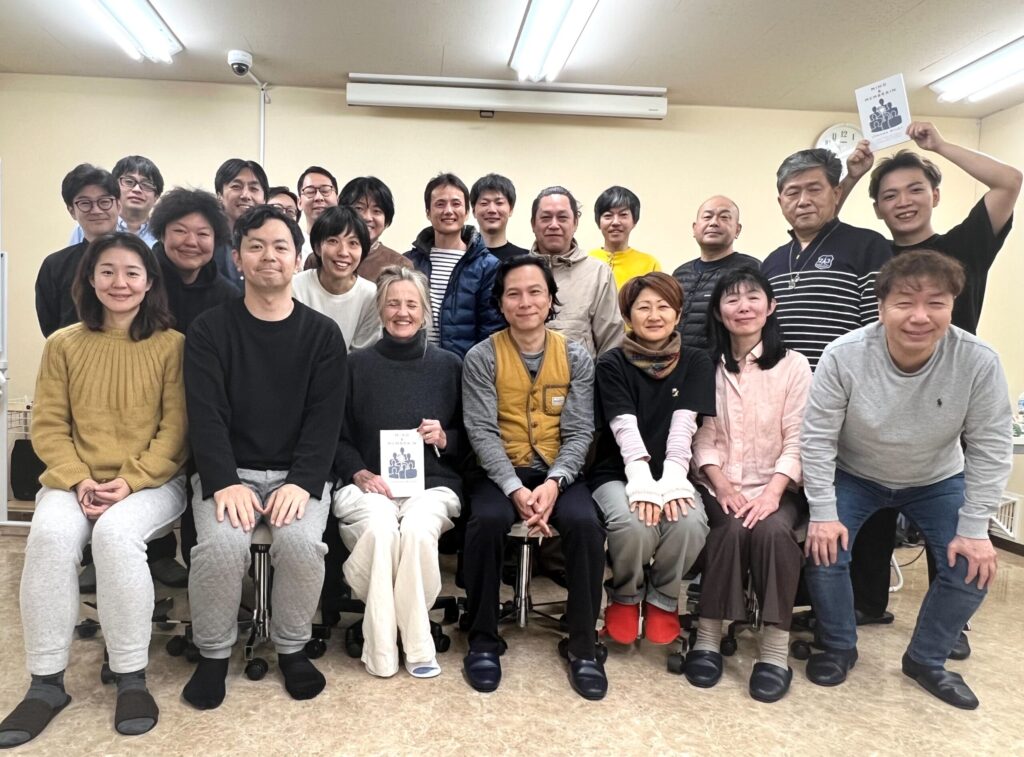
In November 2025, Yusuke Sakata invited Joanna Wildy DO to Japan to lead the first Membrain Health seminar in the country — introducing her clinical framework to a cohort of Japanese osteopaths. This marked the first time the Membrain Health approach had been formally taught in Japan.
Yusuke is listed as one of three Japanese practitioners on the official Membrain Health practitioner directory at mindandmembrain.com. He holds a BSc(Ost) from Swansea University, Wales, and has additionally completed EVOST — a five-year postgraduate programme in evolutionary medicine and osteopathy at morphologicum in Belgium — making him one of very few practitioners globally with training across both frameworks.
Sessions are conducted fully in English. The clinic is on the ground floor (1F) of OQ in central Kyoto.
Frequently asked questions
How long after a concussion can osteopathy help?
There is no strict time limit. We see patients with acute concussion (days to weeks post-injury) as well as those with persistent post-concussion symptoms that have been present for months or years. Older unresolved head trauma can also be relevant — particularly when symptoms that emerged years ago haven’t been explained by other means.
Is this relevant even if my scans were normal?
Yes. Standard neuroimaging (CT, MRI) identifies structural damage, bleeding, and space-occupying lesions. It does not assess the mobility and positional relationships within the cranial system, or the state of the dural membrane. Many people with persistent post-concussion symptoms have entirely normal scans. That doesn’t mean nothing is mechanically present — it means what is present wasn’t captured by that imaging modality.
Is this the same as craniosacral therapy?
No. Cranial osteopathy and craniosacral therapy (CST) are related but distinct approaches. Cranial osteopathy is practised within the context of a full osteopathic assessment and treatment — integrating the cranium, spine, pelvis, and soft tissues as a whole system. It requires a full osteopathic degree, not a short course. The Membrain Health framework is a specific clinical approach within this tradition, focused on the relationship between the dural membrane system and brain function.
Can children and adolescents be treated?
Yes. Yusuke works with patients of all ages, including children and adolescents. Sports-related concussion in young people is a particular area of concern given the still-developing cranial system. Birth-related cranial strain in infants can also be assessed and treated — see the infant osteopathy page.
My symptoms are being managed as a mental health condition. Is this relevant?
Possibly. The Membrain Health framework specifically addresses the overlap between unresolved head trauma and mental health presentations. The brain’s response to a compromised physical environment can manifest as mood disturbance, anxiety, cognitive difficulty — symptoms that are clinically indistinguishable from primary psychological conditions. If there is a relevant head trauma history that hasn’t been addressed, it’s worth a thorough assessment.
This doesn’t mean abandoning your current mental health care. It means adding an assessment that most practitioners aren’t trained to offer — and that might clarify what’s driving some of what you’re experiencing.
Book your appointment online →
Sessions conducted fully in English. No referral needed.
→ Back to English top page
→ About Yusuke Sakata
→ Infant osteopathy
→ Back pain
→ Fees & access
Getting to know OQ Step 1 of 6: What’s going on in my body?
NextWhy look beyond where it hurts?
Why your osteopath often works on places that don’t hurt.